
My first moment in Copenhagen was met by the utter lack of chaos in Kobenhavn Airport. Everything was operating smoothly in an environment I could only describe as lustrous. I left this country without seeing dust and I had dinner at an underground restaurant at some point. Imagine that. Maybe this was how the rest of the world could look if only people respected personal space on a regular basis and did not impose their lives on other people as much. In Copenhagen there is always ample space to live in – even in trains and escalators I had an arm’s length of distance from everything. Meanwhile in London I don’t even dare walk slower than the human behind me in fear of losing my right to exist in that living space. So far, so good.
The Danish are reserved people but very approachable and especially helpful to us when our map reading skills were failing. Their emphasis on simplicity was something I always felt and it truly is inspirational to an extent. If I had to guess, expectations of public decorum (most definitely) included not being too loud. In fact, I witnessed no boisterous laughter in public at all and it is still a wonder to me how I couldn’t overhear ANY conversation – not even from those talking from a mere foot away.
The general atmosphere was pleasant and navigation was easy with the straightforward public transport. It is a small, walking city that we were able to see most of within our first day. I highly recommend exploring by foot if you have a great appreciation for architecture and beautiful narrow streets. As one of Europe’s oldest cities, this Danish capital is home to intricate buildings from the 17th century and an amusement park dating back to 1843. To me, this is simply remarkable.
Things to see
1.City Hall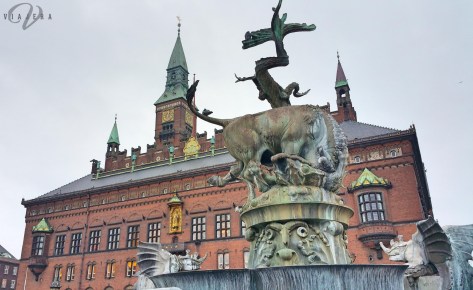
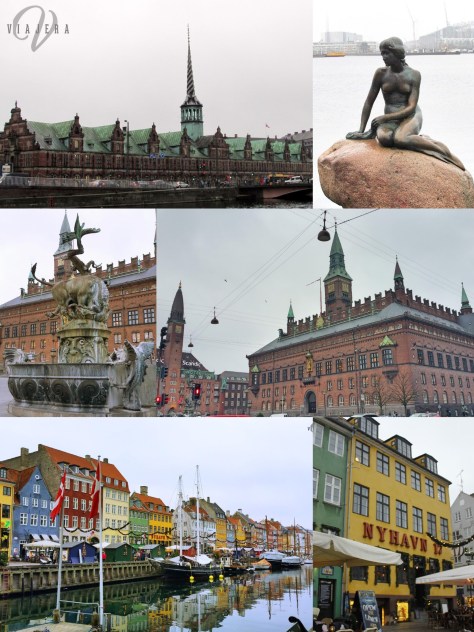
Standing centrally in Copenhagen is its City Hall which was constructed in the late 1800s. It is open to the public but it is just as a memorable when viewed from the City Hall Square.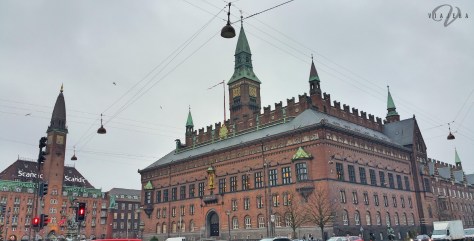
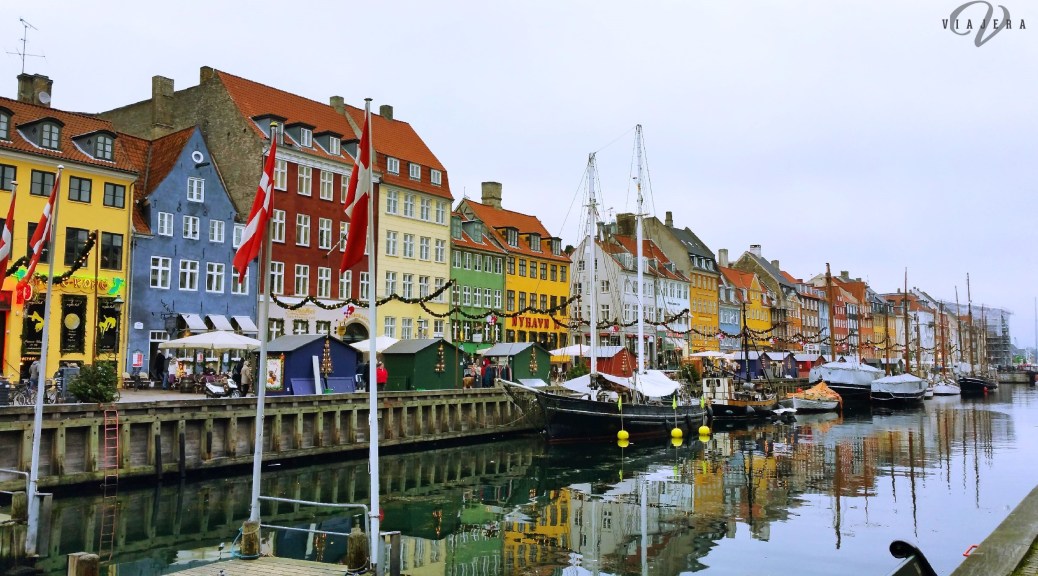
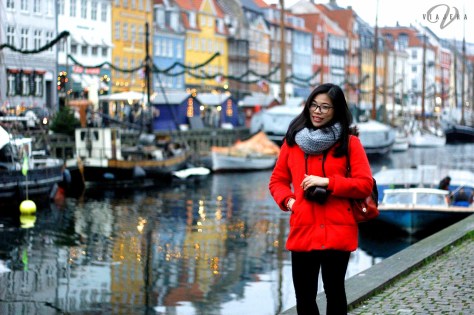
2.Nyhavn

Another must see is Nyhavn, a 17th century canal and entertainment district well known for good food and music alongside that laidback atmosphere. Fairy tale writer Hans Christian Andersen lived in this area particularly in numbers 18, 20 and 67.
3.Rundetaar
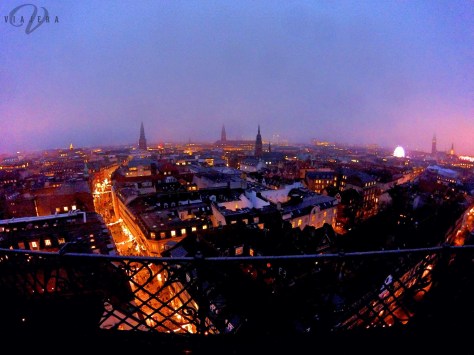
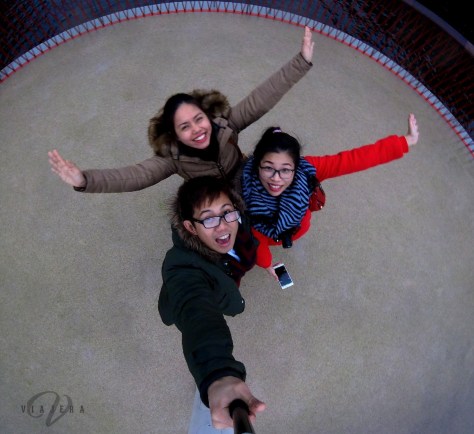
If you are looking for a good viewing point of the city then enter the Round Tower otherwise known as Rundetaar. Its shape make it almost impossible to miss and expect to be rewarded with brilliant panoramic views of upon reaching the top.
4.Little Mermaid
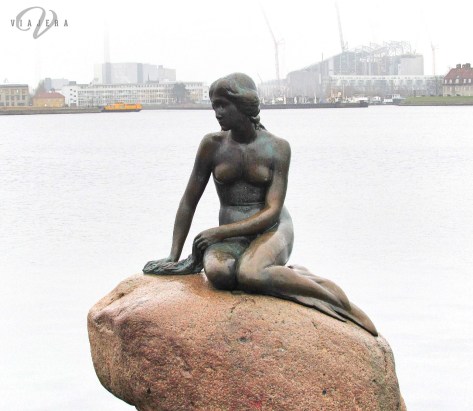
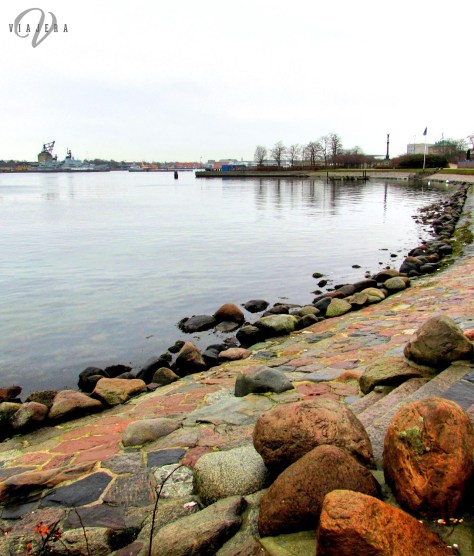
The Little Mermaid Statue is a symbol for this city and is unsurprisingly one of most visited attractions. Fans of the Disney animated film Little Mermaid should definitely put this in their itinerary. Yet even as one of Europe’s prominent landmarks, it is relatively unremarkable from the outside and smaller than one would expect. However, this original statue has stood the test of time and celebrated its 100 years last 2013 after being restored many times due to acts of vandalism and mutilation. It has been put back together time and time again to return to Langelinie Harbour, where she seems to continue longing for to be part of another world. This context alone makes it worth seeing in person because this Danish landmark is definitely a survivor.
5.Freetown Christiana
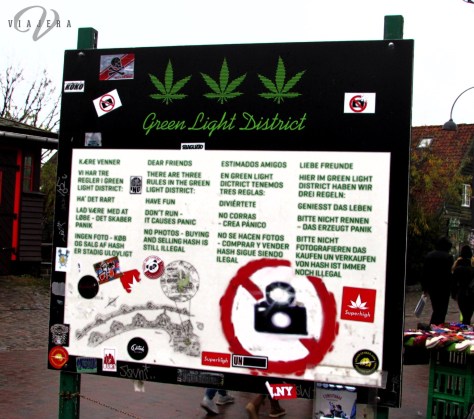
Feeling adventurous or ready for something out of the ordinary? Then strut over to Freetown Christiana. It’s a neighborhood in Copenhagen that will leave you feeling like you have gone to a completely different dimension. Before entering, we were met by an arch welcoming everyone into this controversial chunk of Copenhagen. But let’s just say that you do not need signs to know you’ve crossed over somewhere different – oh trust me you will JUST KNOW. Aside from the independent shops and stalls and quite radical taste for art, Christiana is a hot topic due to the trade of things that may or may not be illegal. Inside, there are very specific rules we all had to abide by for everyone’s safety (mostly ours). The place had a certain feel of danger to it but simply follow the laws of Christiana and you’ll make it out alive. Wink wink.


6.Tivoli Gardens
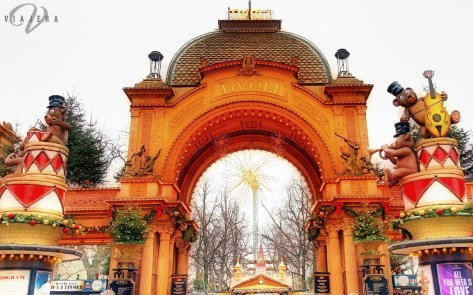
Magical Tivoli Gardens!
There is only one answer to the question what is the best thing to see in Copenhagen. It’s Tivoli Gardens! What makes it one of a kind is not the fact that it’s the world’s second oldest amusement park, but because Walt Disney and Hans Christian Andersen actually spent time here. The place is not just dreamy, it’s where makers of fairy tales as we know it went for fun. Now if that is not amazing then I don’t know what is.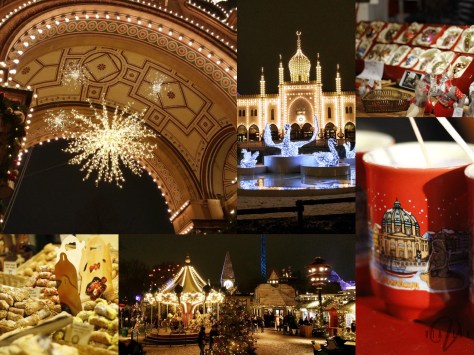
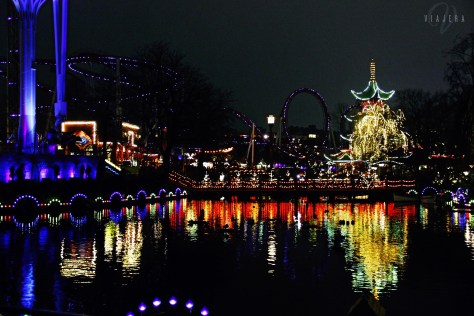
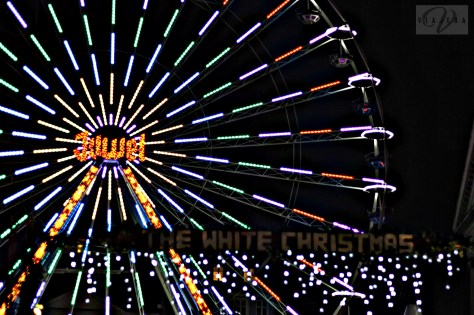
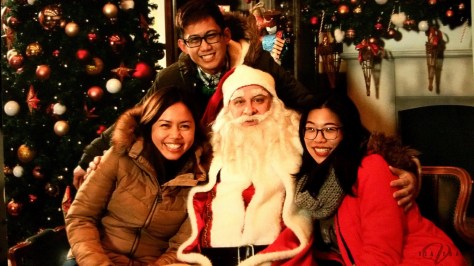
Christmas in Tivoli is unmissable and it was indeed one of my main reasons for flying to Denmark. My friends and I wanted to imbibe on a yuletide vibe that can be quite elusive in London despite the grand display of lights along Regent Street. The Garden was themed with Christmas in every corner and the experience was truly unforgettable. To top this all off, we found Father Christmas! And he took a picture with us to remember this by.
Copenhagen is a destination better explored when a traveler has a deep sense of context about the capital. This city is remarkable in itself but even more so because of the talent that nested and thrived within its humble walls. It’s where people who created magic sought inspiration and ideas and where testaments from centuries ago managed to defy time.
It is a place I see myself coming back to, even if I have to do it alone. There is no special reason underneath, it’s just a place I feel comfortable in with its sophisticated airport and hushed citizens. There was a certain level of ease brought about by the unpolluted air and general mood of the locals. I guess they did not dub this place Happiest City on Earth for nothing. Theirs was a different kind of happy because if you ask me… Copenhagen was full of peace and quiet. It is quite hard to imagine Hans Christian Andersen’s talents flourishing anywhere else.
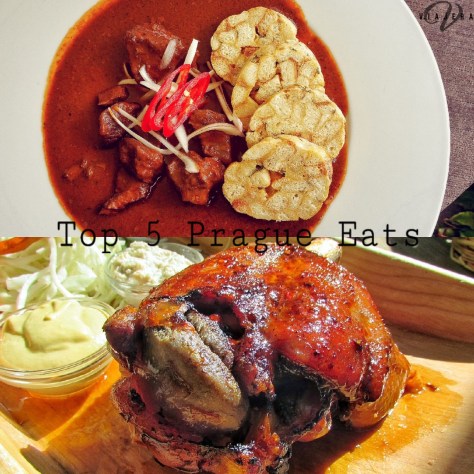 If you love your meat like me, then a trip to Prague is best accomplished with a gastronomic adventure. A word of warning: traditional Bohemian plates may dawn as a nightmare of sorts to your average vegan, as Czechia cuisine is a carnivore’s dream.
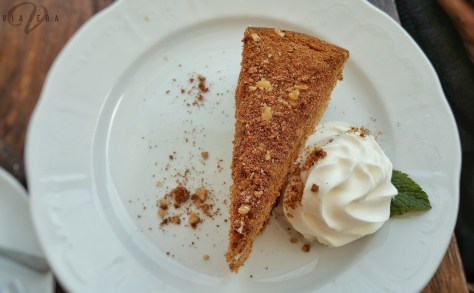 To say that Medovnik falls under the most unique cakes I have devoured is an understatement. I think by far it is the most creative in terms of preparation and its element of deception makes me love it just a little bit more. Upon inspection I actually thought it was going to feel dry and crumbly in my mouth but I could not have been more wrong. However, this is not exactly a moist cake and is rather best described as somewhere in between. It is very light and has a characteristic sweetness that of course, comes from honey. Cafe Lippert’s rendition came with a dollop of cream but it was scrumptious enough on its own. You have to try this for yourself in order to understand why despite the simple exterior, Medovnik proves to be one of Prague’s most famous cakes.
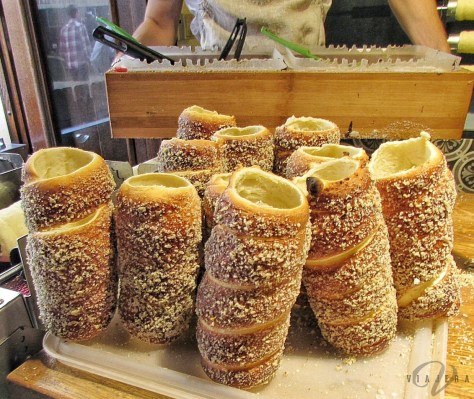 It may be the Czechia people’s love for anything being roasted over an open fire that inspired the creation of Trdelnik. I don’t really know, this is merely an honest observation. But I must admit, it’s a stroke of genius and the Trdelnik – making process is mesmerizing as it is. Imagine cake on a stick, but instead of baking in an oven they have a rotisserie of golden brown pastries; twirling around until it is ready for your mouth. The real challenge though, is eating it without getting chocolate or crumbs all over your face.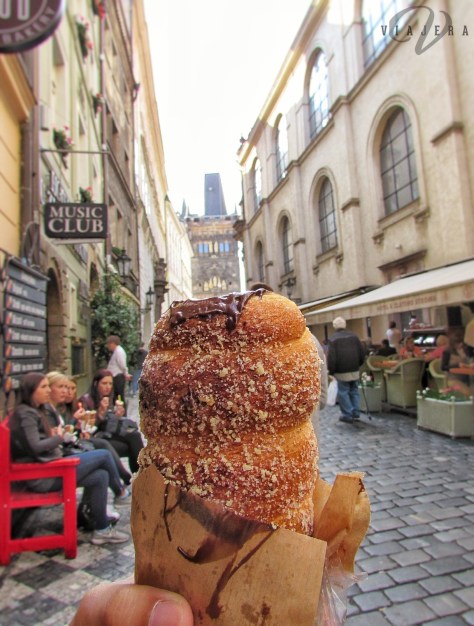
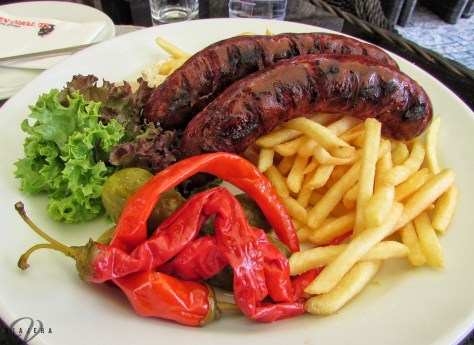 Standing out from the things I have tried out in Prague were their Grilled Sausages. These lovely bolsters of tubed ground meat may be familiar to most but the Czechs have somehow made it their own. It has that distinct smokey flavour but not so much as to ruin the dish, with grill marks sealing in the juicy goodness. As a main course, it can be ordered with sides, of which the local waiter suggested I go for the Frites. All in all a very good meal!
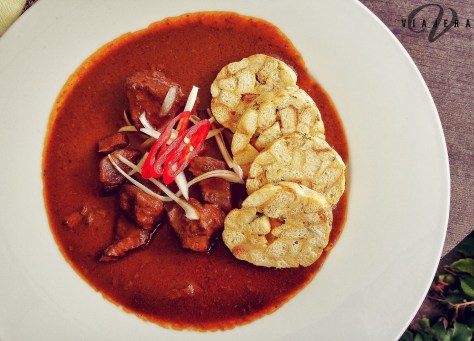 A classic offering among Prague restaurants is Beef Goulash, although the books might tell you that the dish is more of Hungarian in origin. It comprises of tender chunks of beef braised in a mildly spicy sauce, served with a few dumplings of bread. Villa Richter’s version is traditional and appealing with portions that leave just enough room for cake and coffee.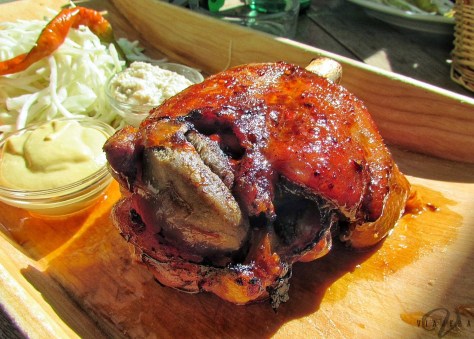
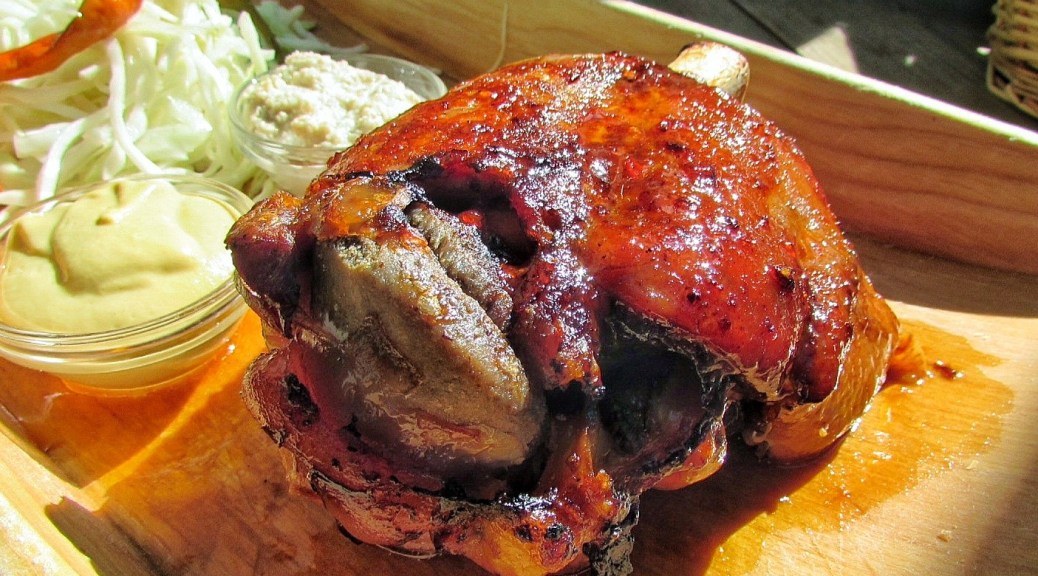
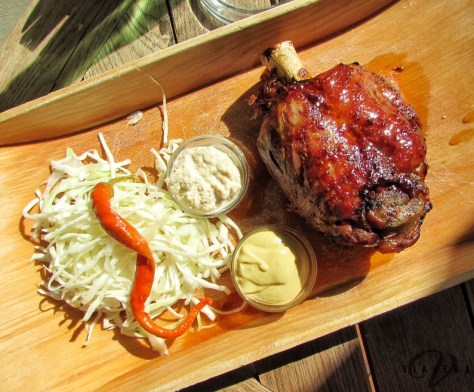 Viajera Travel Tip: We stumbled upon Restaurant U Malvaze along Karlova Street, a place that surprises its customers with spacious rustic interiors that come unexpected from its seemingly meek facade. The food items are priced reasonably and I found the staff to be very friendly. I ordered their version of Roasted Pork Knuckle and it sent me straight to pig heaven. Some things are not worthy of words – unutterable pleasures in life are simply too hard to describe.
 Horacio Cruz would be beaming with pride if he were here to see all of this. His daughter – once but a small – time overachieving girl in a third world public school, now an independent woman discovering the splendors of Europe. I bet even those rich, corpulent sponsors I had at Lions Club couldn’t have come up with this. Me and my friends are heading off to Cap d’Ail to complete our gallivanting across the French Riviera. The weather is perfect as expected, with the sun glimmering over cyan waters and the Riviera’s trademark coastline necklaced by stunning beaches.
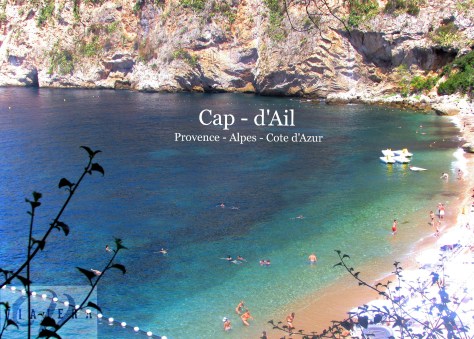 From Nice, Cap d’Ail is approximately a 30 minute journey if you aboard Bus 100. Its surrounding large glass windows provide a great yet brief view of the fantastic scenery. Like that binocular toy I had as a child, only every slide in the reel was nice and I didn’t have to aim it towards anything bright. I personally enjoyed the short ride while of course taking occasional pictures of cliffside ocean views whenever the bus stopped on a red light. The sun kept flooding over me on and off as we veered through ribbons of concrete – and it felt good beyond words. Needless to say, staying in Europe has given me a newfound love and appreciation for direct exposure to sunlight. This 25 degree weather is a warm welcome compared to London’s gloomy skies and cold drafts.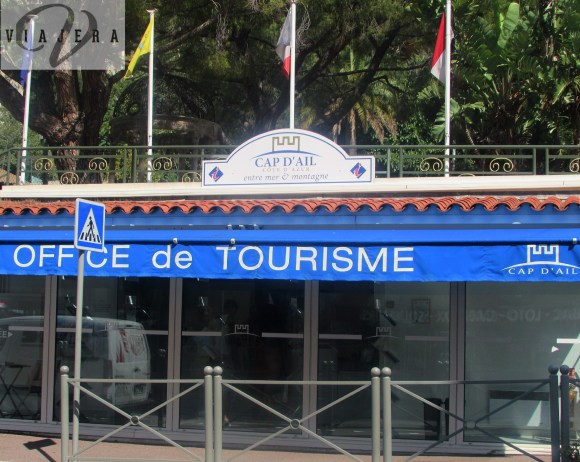
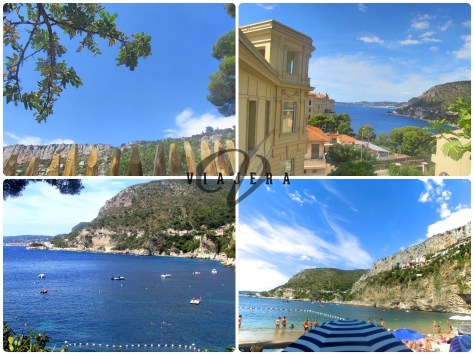 Armed with a white and pink striped beach towel and a lotion that promised ultimate sun protection, I embraced the ambiance and scouted for a square foot of sand nobody wanted. The sun was still baking everything it can reach and I felt its vengeance as I sat on the sand. The cool ocean breeze was a welcome relief and it was so soothing I had to close my eyes for a moment. When I did open them I noticed I was facing towards the rocky slopes that looked very much like the limestone formations in Palawan. Not as beautiful but just as good to the eyes.
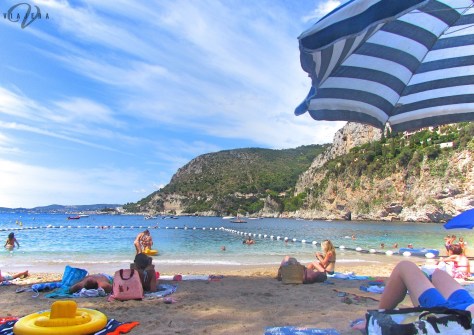 Ocean waves playfully crashed on the mountain side, making calm swishing sounds. Nearby, children were trying to make sand castles while some women were perfecting their tan by going topless. Freedom to all bosoms, budding and pendulous alike. It’s funny how the same thing considered a norm in this part of the world elicits condemnation where I come from. Everything is relative – even normal changes from place to place.
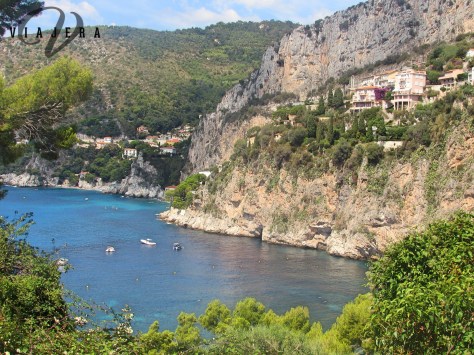 Floating over the waters of Cap d’Ail, I imagine my stress stir away with every stroke from my arms, wishing I could let go of my tragedies just as easily. The seawater was making trickling sounds against my ears and as I gaze upon the blue sky I was blessed with today, one thing was on my mind. If heaven is real I hope you are seeing this right now Pa, because at least I can find comfort in the fact that in a way, you are with me. Perfection has been out of my reach since you’ve left and all I know is that these damn pictures would look so much better if I had them with you.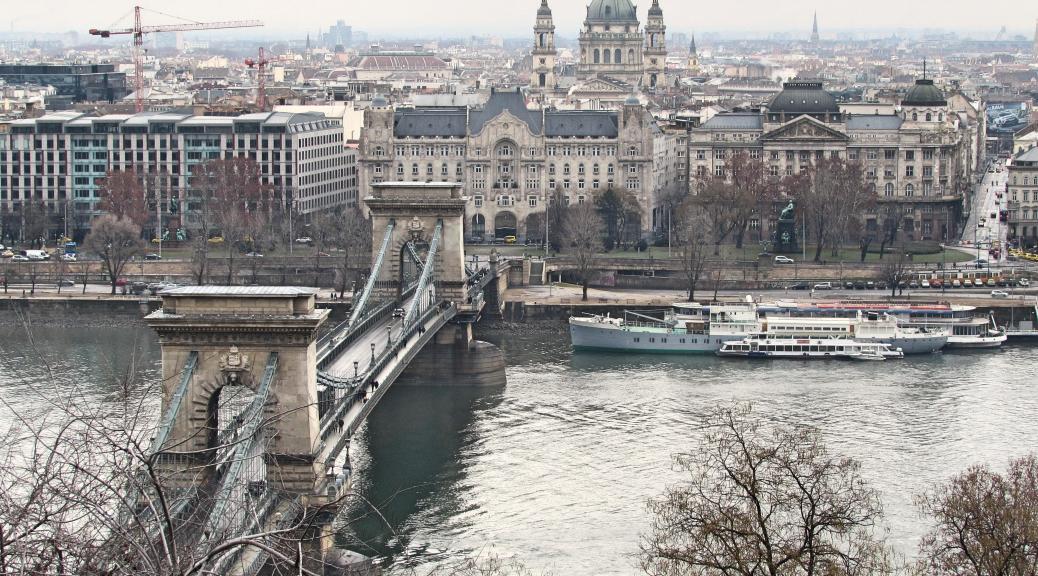
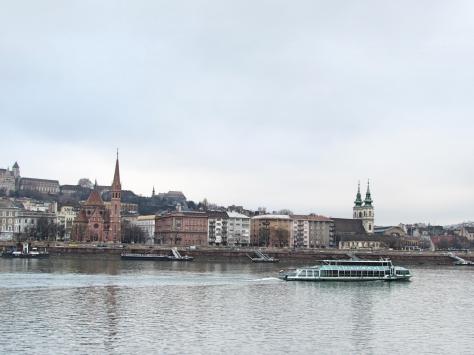
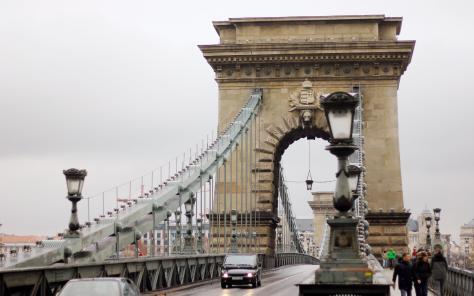 Budapest is parted by the River Danube into Buda and Pest. The capital is connected by bridges, the most famous of which is the Szechenyi Chain Bridge. One of the city’s infamous landmarks, this was the first permanent bridge to cross the Danube and was an engineering wonder during the time of its construction. Call me a hopeless romantic, but it stirred emotions up in me and Budapest is just not the same without it. Tourists flock the area to capture the perfect moment and you might need to wait a while to get your own without a hoard of tourists behind you. But I assure you the waiting is all worth it. Made of cast iron and created with intricate detail, this is an important part of Budapest you should never miss.
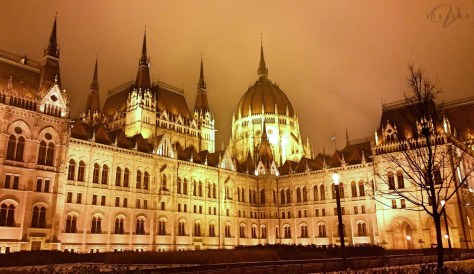 The world’s third largest parliament building is stunning at day, however it truly is a magnificent display of architecture at night. Unfortunately, it was a cold winter evening when we decided to visit and I could not feel my toes and fingers. The freezing cold did not stop me from appreciating the view though. The guards were staring at us with puzzled faces as we shivered our way into selfies and GoPro moments. They must have thought we were losing our minds marveling at the Parliament as patches of icy snow fell upon us but hey – what’s life without a little adventure?! Go for it.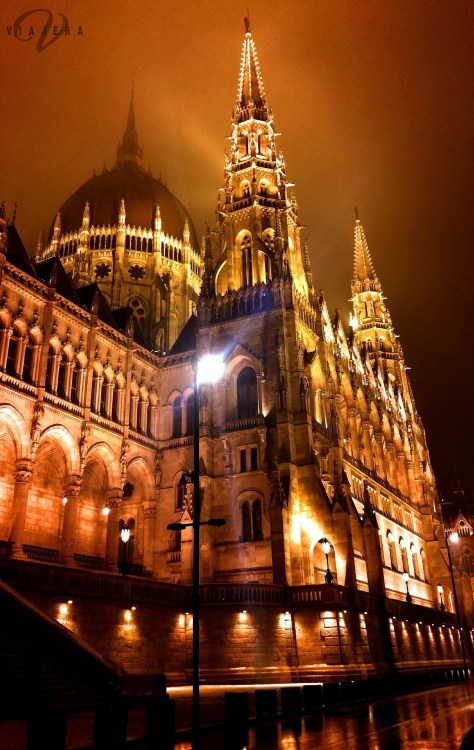
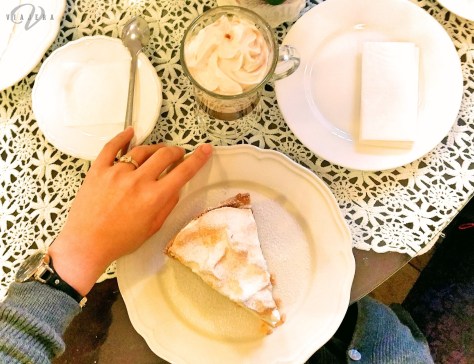 During our winter stay, a cup of coffee with cherry liqueur was not only welcome – it was necessary. Take a quick break from your tour and don’t forget to find a cozy coffee place to rewarm your toes.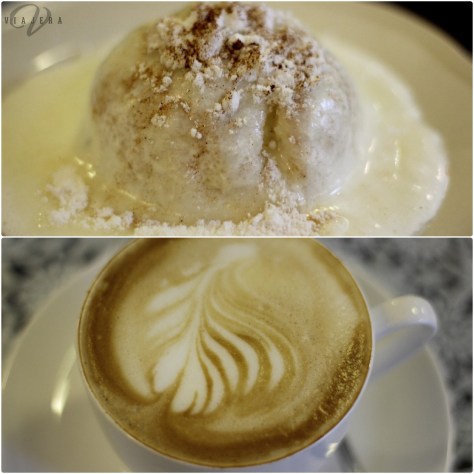
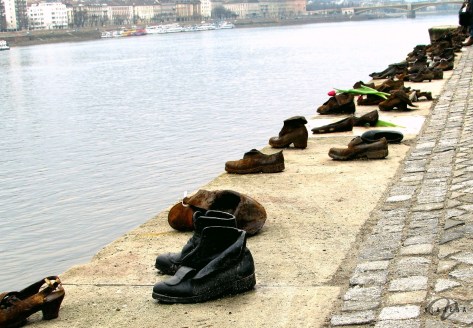 Brace yourself for a time travel inducing experience by paying tribute to the fallen at Shoes on the Danube Bank. A stunning and truly unique memorial, the display showcases pairs of shoes left behind by victims of the Holocaust who were stripped naked and shot point blank while facing the river. Their shoes were the only reminder of what they were – a sad and painfully dark era in human history.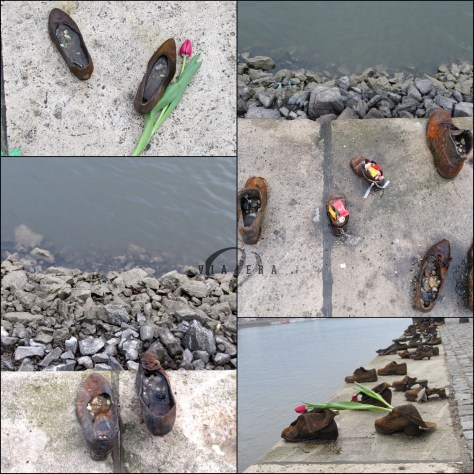

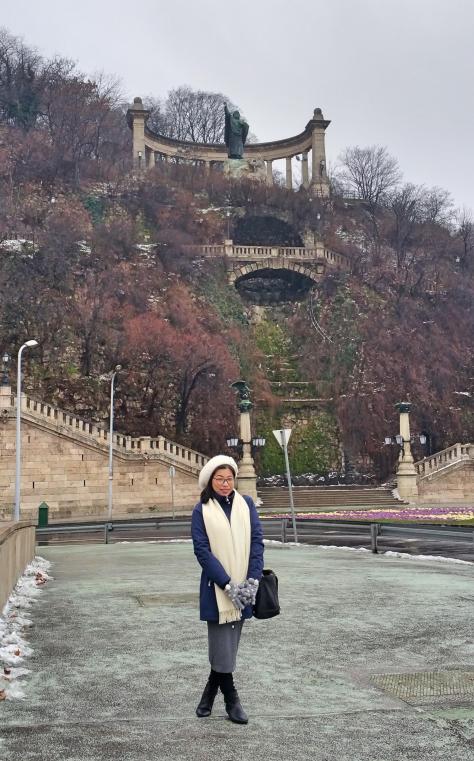
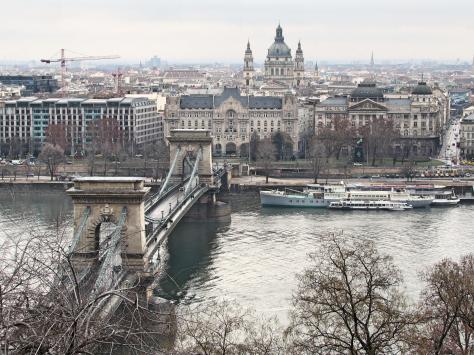
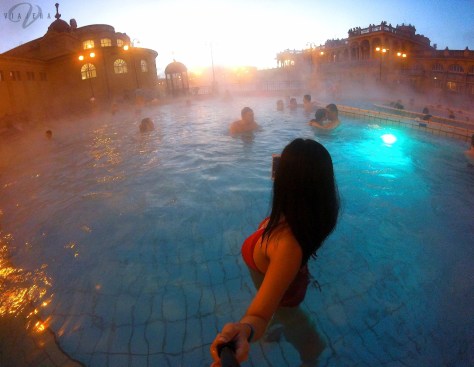
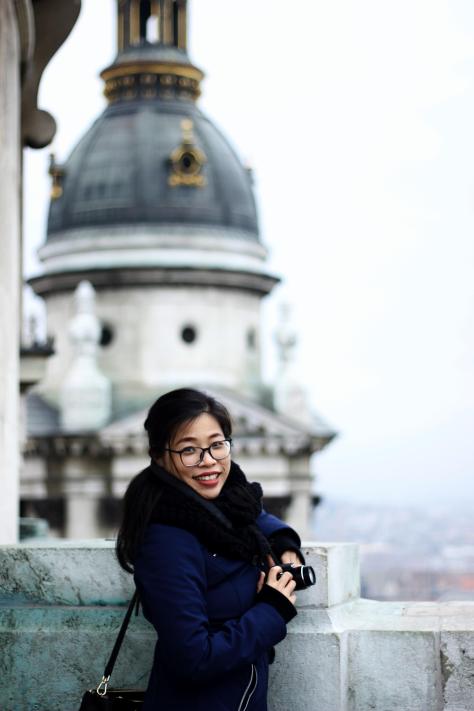 In every European city I visit, I always make it a point to see the nearest Basilica or Cathedral. St. Stephen’s Basilica (Szent Istvan Bazilika) is the largest church in Hungary and dedicated to their first king. The place was a massive and stunning place of worship. Having missed the summit of Gellert Hill, we couldn’t pass on climbing the Cupola for yet another outstanding view. And indeed that view from the Cupola is something you have to see for yourself.
 VIAJERA